The Story of Haydonton
The Private Town Thomas Haydon Founded in 1841
History
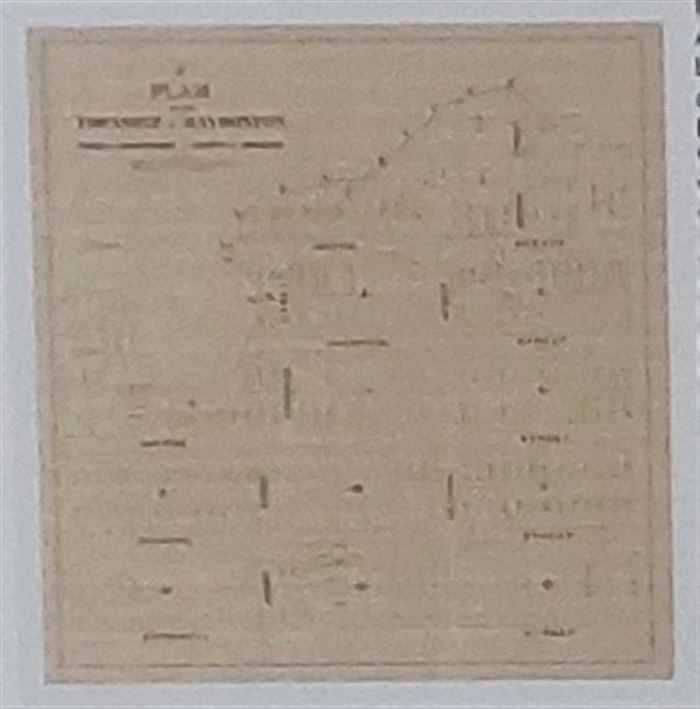
Haydonton is the part of today's township on the southern side of the Pages River, established as a private town in 1841 by Thomas Haydon. Murrurundi proper was the government town on the northern side of the river.
The story starts with Thomas's older brother, Peter Haydon, who arrived in the colony from Ireland in 1830 and first settled at Tivoli, Rose Bay, grazing stock on the eighteen acres he held along the Sydney Harbour foreshore.
Peter went on to become one of the early pioneers of the Upper Hunter, taking up land around Maitland, Blandford, Haydonton, Glenalvon, Warlands and Scotts Creek, and later Wallabadah Station out on the Liverpool Plains, pushing as far as Manilla and Inverell. The next generation followed his lead, driving stock further north again to become early pioneers of the Gulf Country around Normanton.
In 1832 Peter was the first to take up land at Bloomfield, near Blandford, and in 1835 he purchased the Glenalvon and Commodore blocks - 1,831 acres comprising the land on the southern side of the Pages River where the existing township now stands.
In 1839 Peter transferred the Commodore Block to Thomas, and the Glenalvon block further upriver to their sister Matilda, who had married Peter Brodie in 1837 in the first European wedding held in the Pages Valley - an occasion to which everyone in the district was invited. Thomas described the Commodore as one of the finest, most fertile farms on the Page, its scenic river location nestled in the foothills of the Liverpool Range.
The Private Town
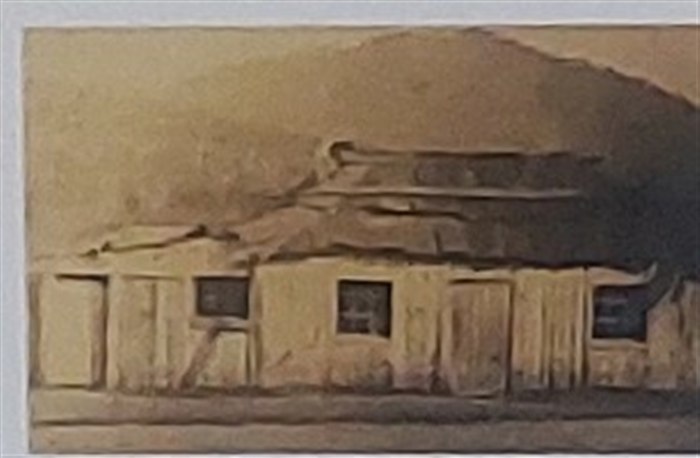
In 1840 the Crown offered allotments for sale in the newly laid-out town of Murrurundi, on the northern side of the river. After repeated requests, Thomas began selling blocks on his own side of the river the following year - the settlement became known as Haydonton.
The private township was surveyed with its north-south streets named Mayne Street after the Crown Land Commissioner, Liverpool Street for pointing toward the range, Haydon Street after the family, Polding Street after the Bishop, O'Connell Street after the Irish patriot, and Bourke Street after the former Governor. The east-west streets took their names from the Queen and her family: Brook Street ran near the river, with Victoria, Adelaide and Albert Streets following. Paradise Park was a large public reserve - later the site of the golf course.
The very first block sold went to Benjamin Hall - father of the future bushranger Ben Hall - for £140. Other early buyers included Alexander Wightman, Thomas's brother-in-law, who built the White Hart Inn, and John Farrell, the town's first resident constable, among many other pioneering families.
It was a frontier town, remembered as a haven of rest for travellers in one of the most idyllic locations in Australia.
The Haydon Family
On 18 May 1841 Thomas married Margaret Wightman of Glengarry Station, a property further down the river - described as "a beautiful girl with a glorious complexion, blue eyes and blue-black hair." Margaret proved a capable woman, carrying on Thomas's businesses and raising their seven children. In 1879 she left Bloomfield when their son Bernard married and moved to Bridge House in Haydonton; when their daughter Caroline later married Dr Rufus Bell, Bridge House became his surgery. Margaret died at Ethelstone in 1889.
The Haydon children scattered widely: Peter survived the wreck of the Maria off the Queensland coast and later lived at Vena Park, Normanton; Thomas became a bank manager in Muswellbrook; William managed Lorraine Station in the Gulf. Bernard continued the family legacy at Bloomfield Homestead, Blandford - the family's pastoral base since 1832 and home of the renowned Haydon Horse Stud.
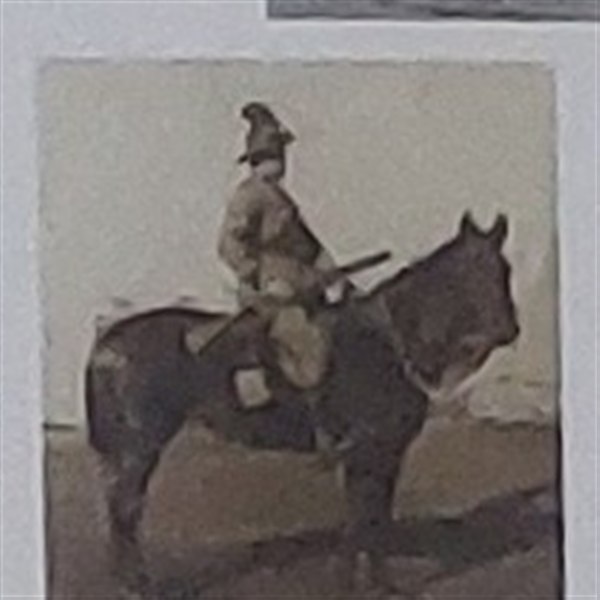
Every generation of the family shared a strong affinity with horses and breeding. Thomas himself purchased the stallion Dover in 1841, who won the Maitland Cup in 1843 and founded the family's breeding dynasty. Guy Haydon's mare Midnight was selected to represent the Australian Light Horse against the British Cavalry in competition at Cairo, winning all three events - before carrying Guy in the famous 1917 Charge of Beersheba, taking the brunt of a bullet meant for him and saving his life. Barney Haydon rode his gelding through the entire WWI Middle East campaign from 1915 to 1919, and went on to become a renowned judge. Fred, Bernard and Jim bred generations of noted stock horses and campdrafters. Peter Haydon went to England in 1989 to manage the Royal Horses at Windsor Castle and play polo for the Guards Polo Club; with his wife Alison he bred Haydon Angel Jewel, the only horse ever to win every major polo tournament in the world.
Early Development
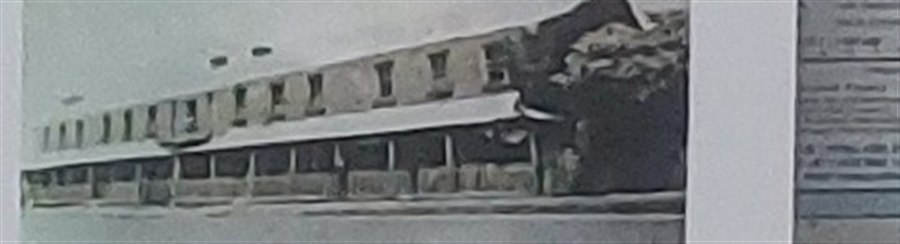
Thomas was proud of his township, writing home that it had "completely left the Government town in its shade" - with double the population and its own commercial centre. He was the community's driving force, establishing the shops, banks, schools, a Cobb & Co staging depot, a hospital and the Court House in 1843, where he served as magistrate.
A bridge joined the two towns in 1864, and the railway arrived in 1872, bringing an important locomotive depot ahead of the climb over the range. In 1841 Thomas donated the land for a small wooden chapel, St Joseph's, named for his patron saint, along with the adjoining cemetery and later the Convent - he also set aside land for the Anglican church and its own cemetery.
In 1842 he formed the Murrurundi Racing Club, his stallion Dover winning the main event; Thomas would ride Dover the 156 kilometres to Maitland to do the family's banking, and the Haydons remain the oldest continual client of the ANZ Bank there today. In 1943, a later Dover won the Maitland Cup outright - three races run as heats over 3,200 kilometres in a single day, with Thomas riding him home again the next day.
Haydonton and Murrurundi still field dual cricket teams to this day. The Haydonton Post Office closed in 1913 and the name lapsed, though Murrurundi's post office has since moved back to the Haydonton side of the river.
Murrurundi itself takes its name from the Aboriginal word "Murrumdoorandi," referring to nearby rock formations resembling five fingers - also a traditional meeting place for the Wonnarua and Kamilaroi peoples.
Thomas Haydon
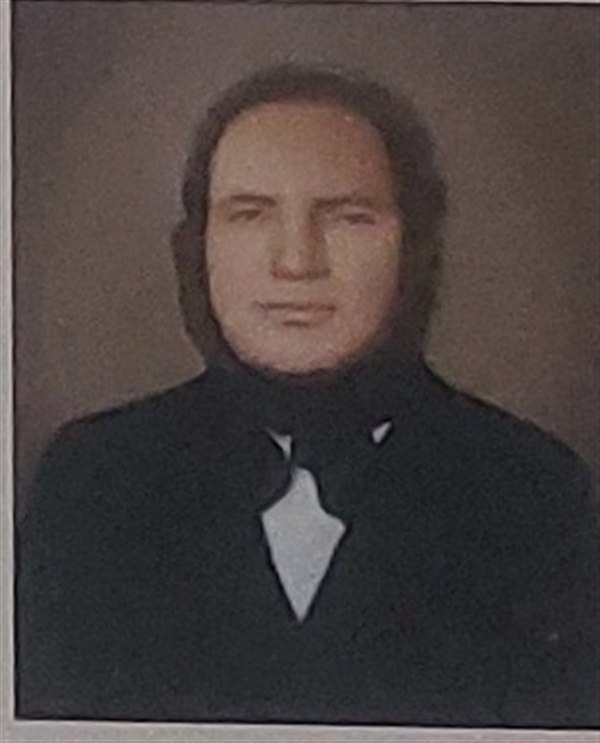
Thomas was a man of big stature and a much-loved member of the community, known for his fair dealing and care for everyone around him. He was an entrepreneur, pastoralist, horseman, horse breeder, magistrate, gold buyer and town developer, and in hard times he ran the district's boiling-down works, when the tallow from stock was worth more than their meat or fibre.
His brother Peter died at Bloomfield on 4 March 1842, aged forty, the first burial in the new cemetery on the Haydonton land he had originally selected. Thomas himself died on 2 November 1855, aged just forty-one, and was buried beside Peter - their short lives a measure of how harsh conditions were for the district's early pioneers.
Thomas's funeral procession stretched two miles, as the entire community turned out. He was remembered as someone "excelled by none and equally by few," the first founder of the neighbourhood, "broad minded, liberal and fair," a man who "stood out like an oasis in the desert" compared to his contemporaries, and whose bright smile and cheery face "brought sunshine to the gloomiest abode."
He predeceased his wife Margaret, five sons - Peter, Stuart, Bernard, Thomas and William - and two daughters, Caroline and Mary, having founded a large family dynasty whose descendants and horse bloodlines carry on today.